
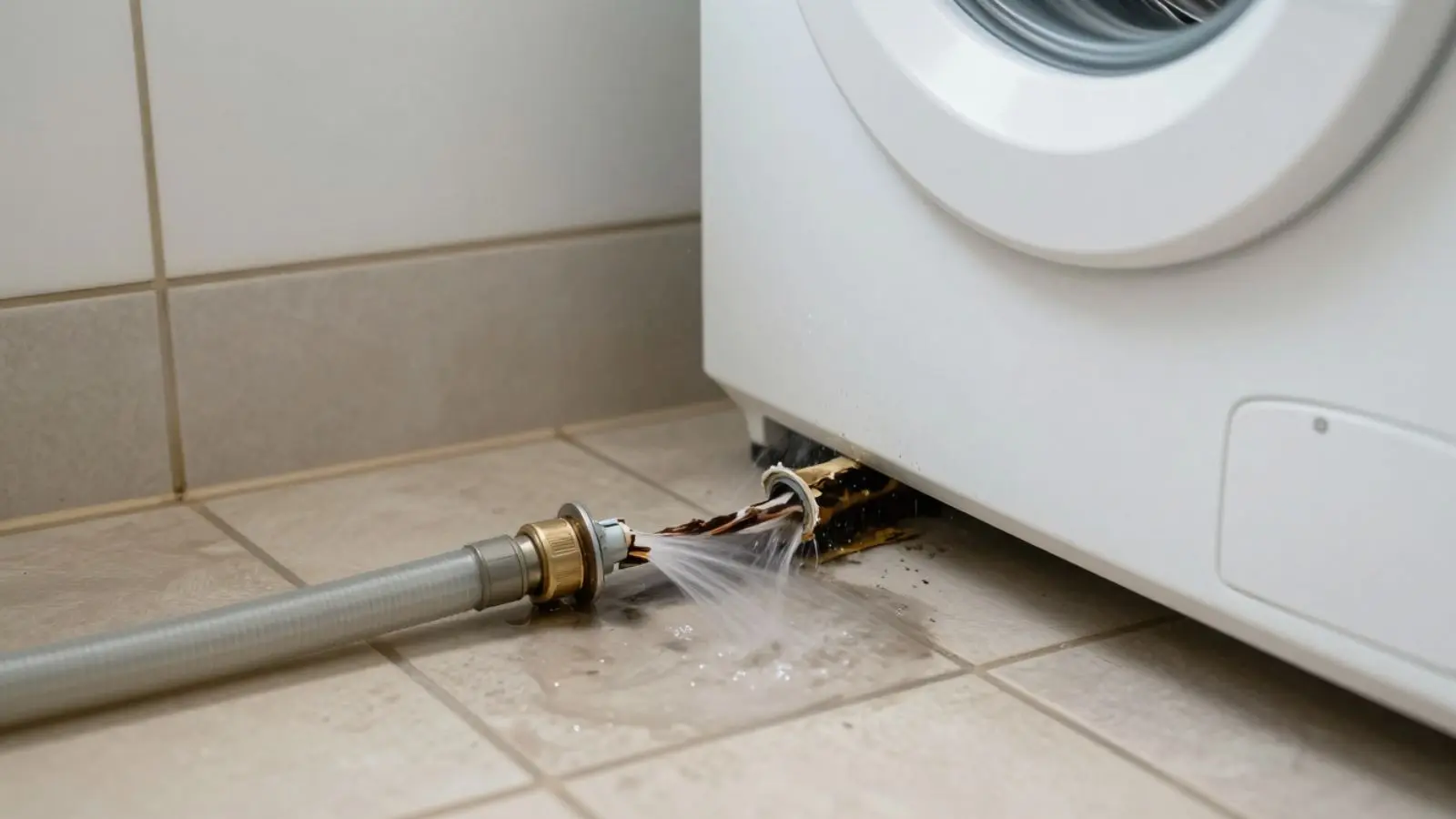
How appliance leaks happen in desert homes
Appliance leaks are quiet. A washing machine hose that has hardened, a dishwasher inlet that has loosened or an ice maker line that has cracked can drip behind the machine for days. By the time a stain shows, the subfloor, the toe kick or the drywall behind the unit may already be wet.
Seasonal use makes this worse in the valley. The city's population rises in the cooler months, and many homes sit empty part of the year, so a supply hose under pressure in an unoccupied house can fail with nobody home. Water that runs for days before anyone arrives is the usual story behind a large appliance loss.
Appliances in garages and laundry closets add a second problem. These rooms often have a slab floor with no drain, so water flows toward doors and into adjoining rooms, and carpet in a hallway can wick water up into walls.
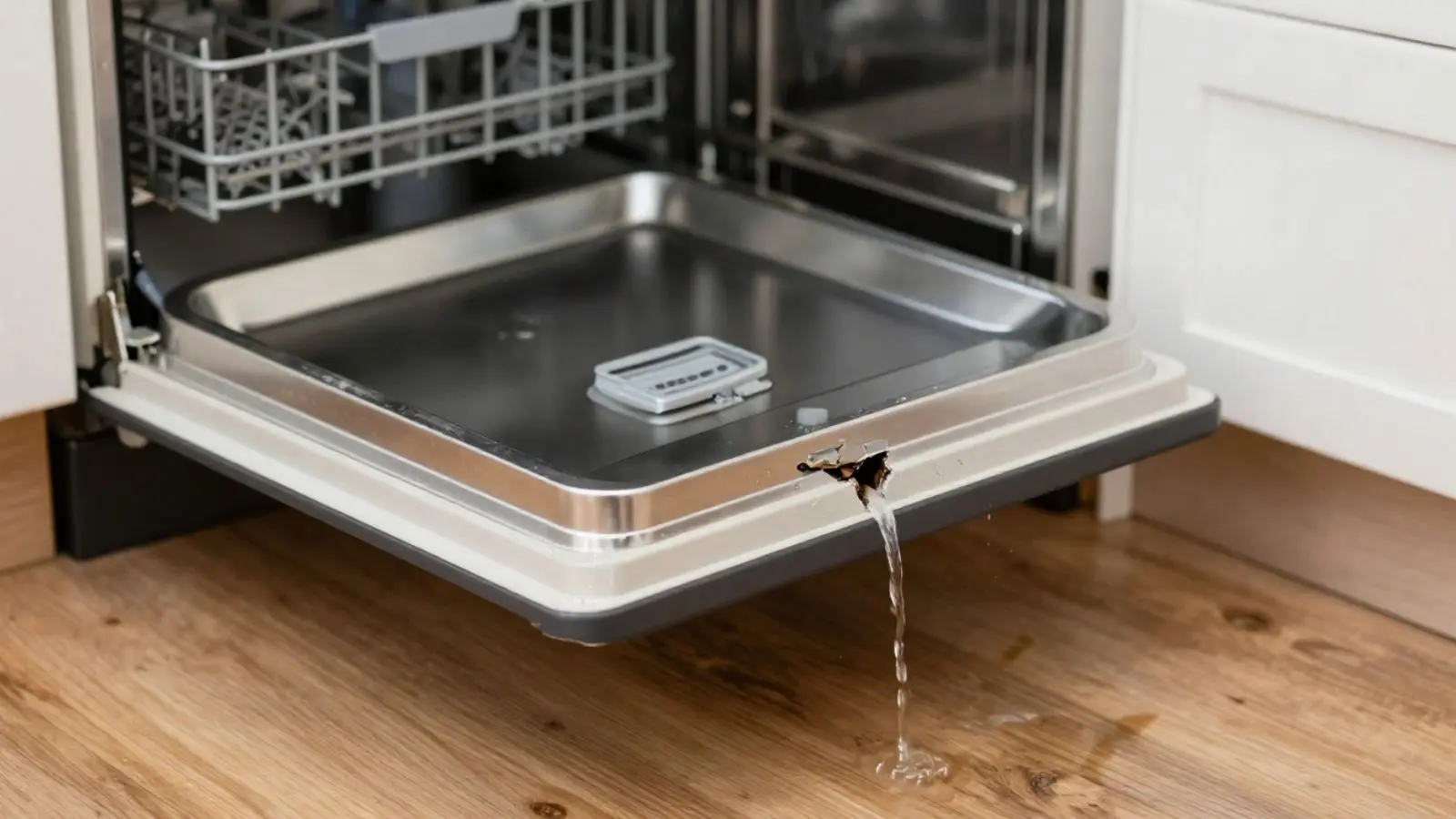
What you see and what it means
Each appliance leaks differently. Use the table to match the sign you see to the likely source.
| Where the water shows | Likely source | What to check |
|---|---|---|
| Wet floor in front of a washer | Supply hose, drain hose or a door seal | Hose ends and the shutoff valves |
| Water under a dishwasher or along a toe kick | Inlet valve, door gasket or the drain line | Open the toe kick panel |
| Puddle at the base of the fridge | Ice maker line or a clogged defrost drain | The small valve behind the unit |
| Stain on a wall behind the machine | A hidden drip at a valve inside the wall | Photograph it and keep the unit off |
| Soft flooring near a laundry closet | A slow leak that has run for days | Moisture readings before anything is replaced |
Safety steps for the first hour
Disconnect power to the appliance. If the floor is dry and the plug is reachable, pull it. If you have to stand in water to reach the plug or the breaker, do not. Close the appliance's own shutoff valve, which is usually a small lever or wheel on the wall behind it, or close the main water valve.
Water from a washing machine or dishwasher is usually classed as Category 2, or gray water, under the ANSI/IICRC S500 reference. That means it can carry contaminants and should not be mopped into bare hands. Wear gloves, keep children and pets out, and do not use a household vacuum on wet floors.
Move rugs, furniture and stored boxes off the wet area. Photograph the appliance, the hose or valve, and the water on the floor.
- Power off at the plug or breaker only if dry and reachable
- Close the appliance shutoff valve or the main
- Treat the water as gray water
- Photograph the source before you clean
How the crew dries an appliance leak
A moisture meter and thermal imaging camera show where the water went, including under cabinets and into wall bases. Extraction units and wands remove standing water, and pad that has soaked up water is usually removed from carpeted rooms. Hard floors like tile can dry in place, while engineered or laminate flooring may swell and need replacement.
Air movers and LGR dehumidifiers then run until the readings match the drying goal. For a dishwasher or sink-side loss, the cabinet base and toe kick are opened so they can dry. See our kitchen water damage page for the cabinet side of the work.
When wet debris and porous materials are out, water damage cleanup handles the surfaces and odor.
What changes the cost of an appliance leak
The main drivers are how long the leak ran, how far the water traveled and what the floor is made of. A leak caught in minutes on tile is small. A leak that ran for a weekend under laminate and into a wall base is larger.
Water category also matters, since gray water calls for removal rather than just drying. Scope and price come first, before anyone starts work.
Insurance and appliance leaks
Sudden failure of a hose or valve is the kind of loss many policies address, while a slow seep that built up over months is often excluded as maintenance. The policy may cover the damage but not the appliance itself. Check your policy or ask your insurer.
Photos of the hose, the valve and the floor help, and so does a short written timeline of when you found it. If water is spreading, call (760) 769-1159.
Mistakes to avoid and prevention
People often wipe the floor and run the appliance again, which leaves wet subfloor and a leak that will repeat. Another mistake is ignoring a hose with bulges or rust at the ends. A third is using the water in a leaking line to keep cleaning.
Braided steel hoses last longer than rubber ones. Replacing hoses on a schedule and closing the supply valves when the house is empty are the best ways to stop a repeat. If you are away for weeks, a simple leak alarm near the machine is cheap protection. Cabinet or plumbing rework may need a City of La Quinta Building Division permit, so ask first.
Where we work
We answer appliance leak calls across La Quinta and in nearby Palm Desert and Indian Wells. If the water is still pooling, emergency water removal starts first. To talk through a leak, call (760) 769-1159 at any hour.
Questions we hear from La Quinta homeowners
Is emergency appliance leak cleanup available in La Quinta?
Yes. Name the appliance and say whether its valve is closed, and dispatch lines up a crew with same-day response when available. Nights and weekends are covered the same as weekdays.
Is washing machine water dangerous?
It is usually treated as gray water, which can carry soap and bacteria. Wear gloves, avoid skin contact and let a crew assess any porous materials it touched.
Can I just dry the floor with fans?
Fans move air but do not pull water from inside subfloor and wall bases. Without meter readings it is hard to know if the structure is dry, and moisture left behind can lead to mold.
Will the appliance need to be moved?
Yes, in most cases. The unit has to move so the floor and wall base can be checked and dried. If it is hard-plumbed, a plumber disconnects it first.
Does the cleanup cover repairing the appliance?
No. An appliance repair company or plumber fixes the hose, valve or unit. We extract the water and dry the structure.
Water still spreading? The line is open 24/7.
Call (760) 769-1159