
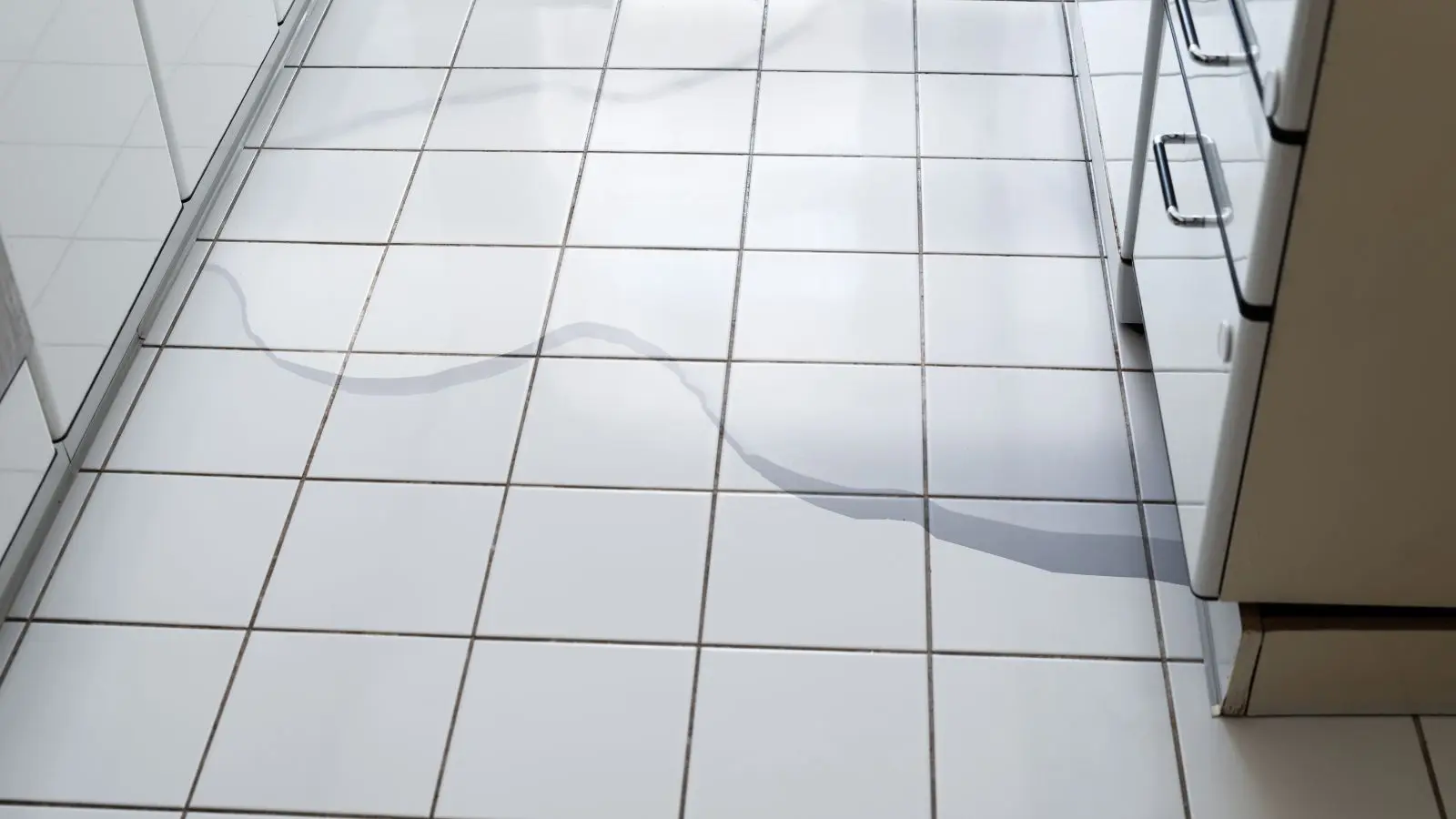
Why kitchen water damage is its own problem
A kitchen packs a sink, a dishwasher, a refrigerator line, a garbage disposal and often a gas or electric range into one room. Every one of them is a possible source, and every one sits next to cabinets, flooring and a wall. Water here tends to travel under cabinets and behind them, where it cannot be seen.
Cabinets are the difficult part. Many are made of particleboard or other composite panels, which swell and weaken when they stay wet. Solid wood and plywood handle moisture better. Whether a cabinet base can be dried or has to be replaced depends on what it is made from and how long it was wet.
In the valley, kitchens in seasonal homes can stay shut for months. A slow drip under a sink in an empty house can run for weeks, and the first sign may be a soft floor or a musty smell when the owners return.
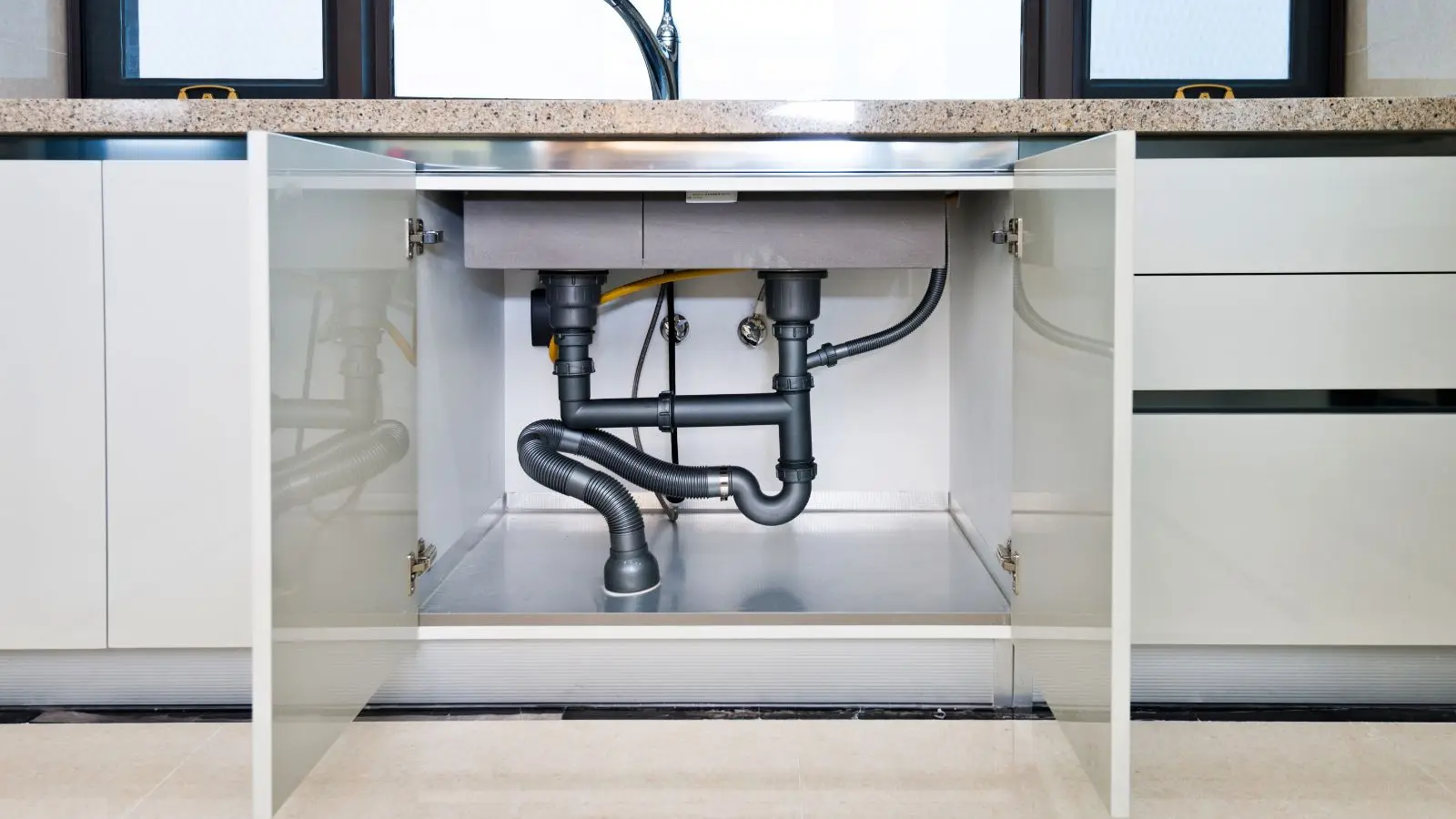
What you see and what it means
The signs below show up in kitchens, and each one points to a different place to look.
| Sign | What it suggests | What to check |
|---|---|---|
| Swollen cabinet base or toe kick | Water has been sitting against the panel | Open the cabinet and look for stains |
| Soft or lifting flooring | Water under the floor covering | Moisture readings before replacement |
| Musty smell under the sink | A slow leak at a trap or supply | Dry the cabinet and check the lines |
| Stain on the ceiling below | A kitchen leak above a lower level | Shut off water and photograph it |
| Wet floor near the dishwasher | Inlet valve, hose or gasket failure | Close the dishwasher supply |
Safety steps in the first hour
Close the shutoff valve under the sink, or the dishwasher or refrigerator valve if you know the source. If you cannot tell, close the main water valve. Then open the cabinet doors and remove items so the cabinet can breathe.
Kitchens have a lot of electricity near water. Do not touch outlets, the range or the dishwasher if you are standing in water. If the floor is dry and the breaker is reachable, switch off the circuit for the wet area. If gas appliances are involved and you smell gas, leave and call your gas utility or 911.
Move food, small appliances and dishes off wet counters and floors. Photograph the source, the water and the damaged items before you wipe anything.
- Close the under-sink or appliance valve, or the main
- Do not touch wet outlets or appliances
- Gas smell means leave the house
- Photograph before wiping
How a kitchen is dried
A moisture meter and thermal imaging camera map the water in the floor, the cabinet bases and the wall behind them. The toe kick is removed to let air reach the cabinet base, and holes may be drilled in hidden cavities to push dry air in. Extraction units and wands remove standing water from tile, vinyl or wood.
Air movers and LGR dehumidifiers dry the room. Cabinet boxes that stay swollen or delaminated are removed, and countertops may have to be detached and reset when the base is replaced. Tile floors can often dry in place, and the substrate beneath is checked before anything goes back.
ANSI/IICRC S500 is the standard reference for this work. When the kitchen is dry and cleaned, water damage repair covers cabinets, drywall and flooring replacement.
What changes the cost of kitchen water damage
The cabinet material and layout drive much of the cost. A run of composite cabinets that must be replaced is a bigger job than a single dried base. Flooring type, the extent of subfloor wetting and whether the island or an appliance has to be moved also matter.
Water category counts, too. A supply line leak is cleaner than a dishwasher or drain overflow. We explain scope and price before work starts.
Insurance and kitchen leaks
Many policies address a sudden failure such as a burst supply line or an appliance hose, and many do not cover a slow leak under a sink that went unnoticed for months. Flood is usually separate. Cabinets and flooring are often part of a claim, depending on the policy.
Check your policy or ask your insurer. Photographs of the source and the cabinet interior help. If water is spreading, call (760) 769-1159.
Mistakes to avoid and prevention
People often wipe the visible water and leave the cabinet base wet. Another is installing new flooring before the subfloor has been checked. A third is storing cleaning supplies under the sink where they hide a leak.
Look under the sink every few weeks, and replace braided supply lines before they age out. Mold risk climbs after about two days of wetness according to EPA guidance, so an overnight leak should be dried the same day. New cabinet runs and replumbing are worth a call to the City of La Quinta Building Division before work starts.
Where we work
Kitchen losses in La Quinta come to us, and so do calls from Palm Desert and Indian Wells. If a washer or dishwasher caused the loss, see appliance leak water damage. For a wet kitchen, call (760) 769-1159 and tell us the source.
Questions we hear from La Quinta homeowners
Is emergency kitchen water damage restoration available in La Quinta?
Yes. Tell dispatch what failed and what the floor is made of, and a crew follows with same-day response when available. Late-night kitchen leaks get the same response as daytime ones.
Can wet kitchen cabinets be saved?
Sometimes. Solid wood and plywood often dry. Particleboard that has swollen or delaminated usually does not, and the base is replaced.
Do countertops have to come off?
If the cabinet base has to be replaced, the countertop is usually detached and reset. Natural stone needs careful handling, and a crew can explain the plan.
What if the water came from upstairs?
Water from a bathroom or unit above can stain a kitchen ceiling and soak insulation. The source needs to be fixed first. Then the ceiling and cabinets below are checked and dried.
Will mold grow in the cabinet?
Mold needs moisture, and a wet cabinet base provides it. Drying quickly reduces the risk. If you see growth, ask about mold remediation.
Water still spreading? The line is open 24/7.
Call (760) 769-1159