
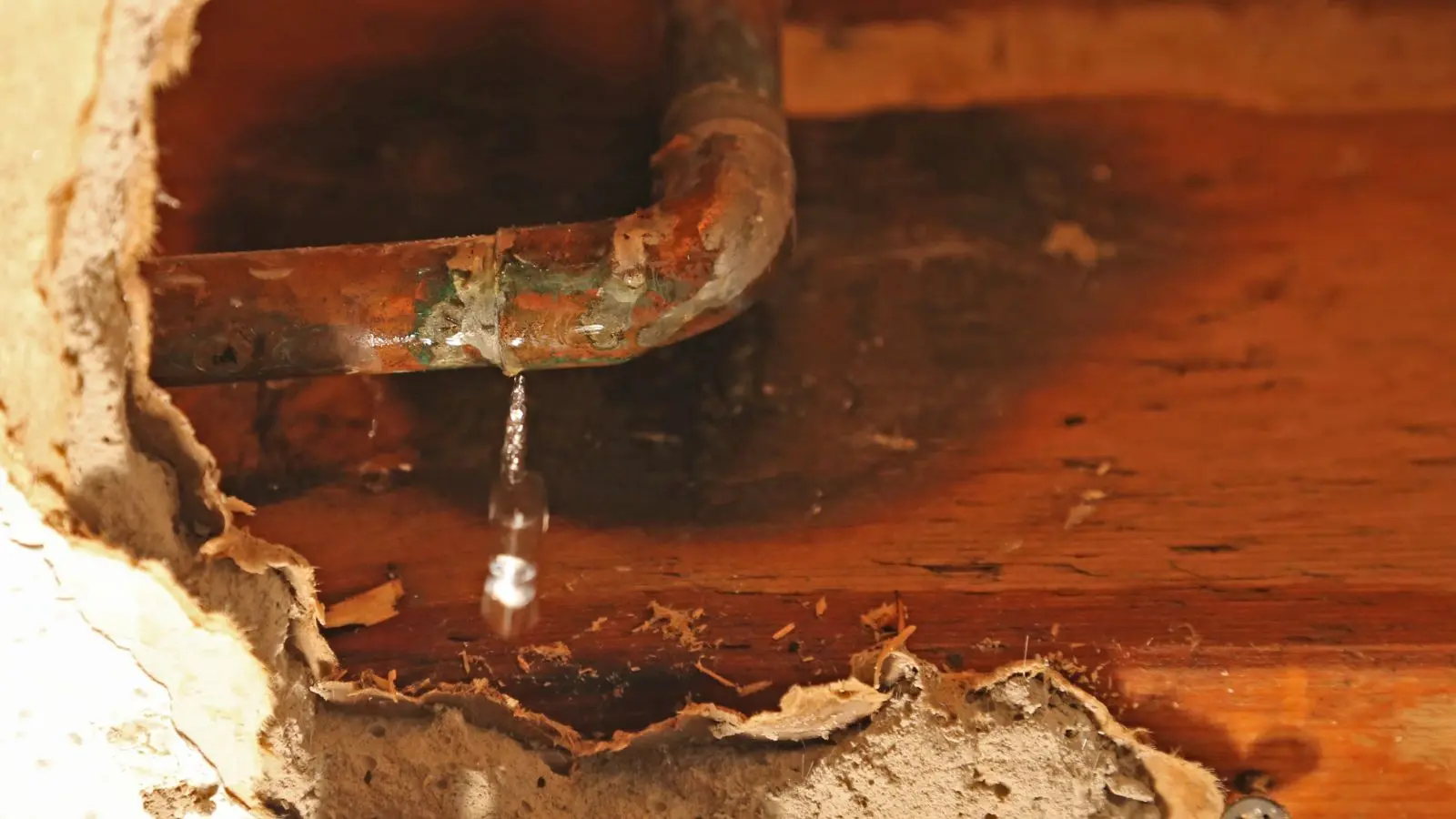
What a burst pipe does to a La Quinta house
Burst pipe cleanup begins the moment the water is off. A split supply line, a failed fitting or a cracked drain can release a large volume in a short time, and the water follows the easiest path through walls, cabinets and flooring. This page covers the cleanup and drying that follows a pipe failure, and the steps that keep it from getting worse.
Most La Quinta homes are young by national standards. The city incorporated in 1982, and Census Bureau counts show the population rising from about 11,200 in 1990 to about 37,600 in 2020, so a large share of houses date from the 1990s onward. That puts original supply lines, valves and fittings at 20 to 35 years of service, the age when connectors and corroded lines begin to give out.
Heat adds its own strain. NOAA climate summaries show summer afternoons that regularly pass 100 degrees, and pipes in attics, garages and exterior walls swing through large temperature changes. A hard freeze is uncommon in the valley, though exposed outdoor lines can still be caught on an unusually cold night, so most local failures come from age, corrosion or pressure.
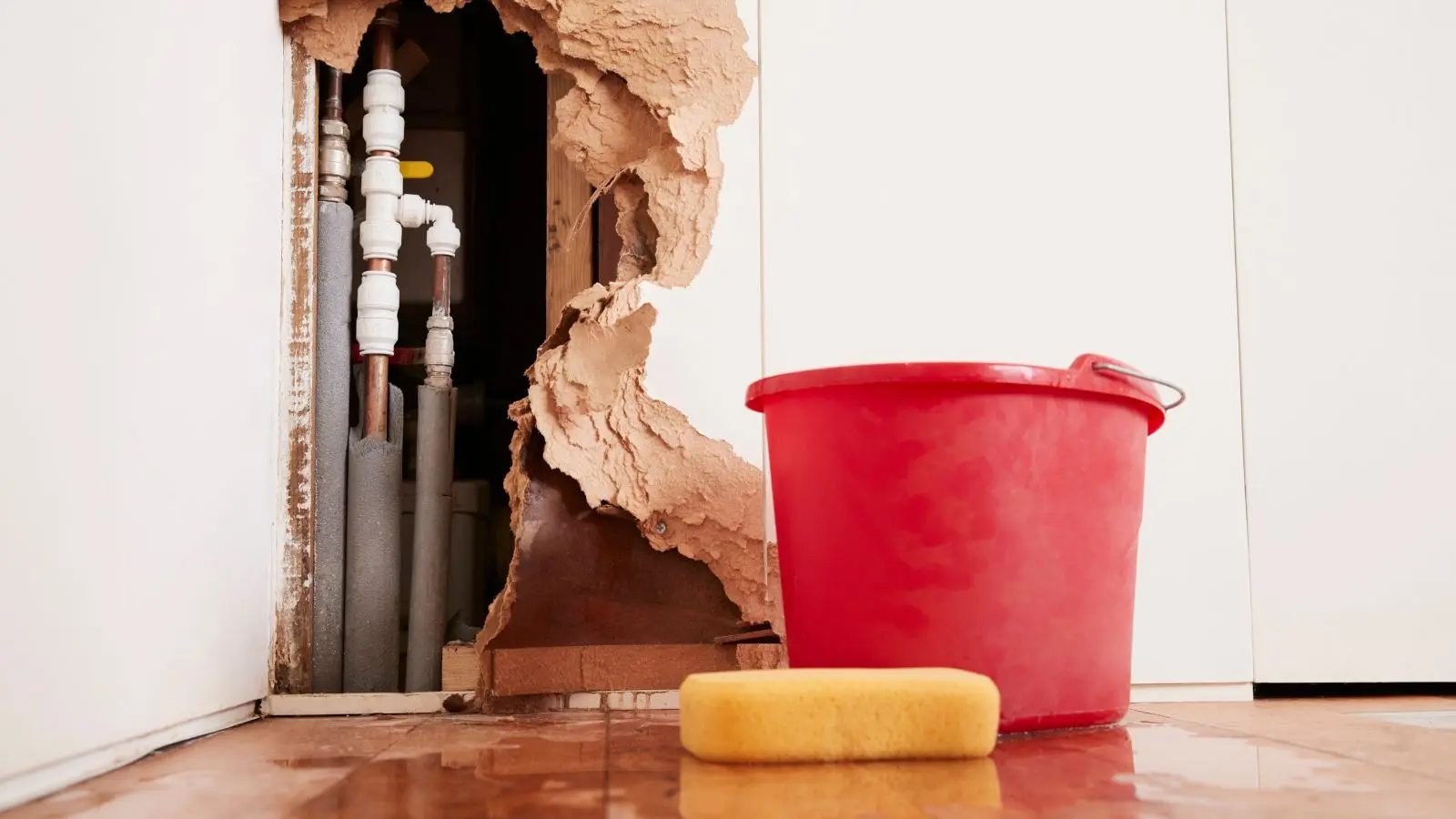
What you see and what it means
Water rarely announces a burst pipe politely. The signs below are the ones callers describe most often, and each points to a different place the water may be hiding.
| What you notice | What it usually means | First move |
|---|---|---|
| Running water sound with every fixture off | A pressurized line is open somewhere in a wall, ceiling or slab | Close the main valve |
| Water pressure suddenly drops | A line has split and is dumping water before it reaches the tap | Check the main, then look for wet floors |
| Warm spot on the floor | A hot water line may be leaking under the flooring | Shut the main and the water heater supply |
| Bubbling paint or a soft wall | Water has been inside the cavity for a while | Photograph it and keep people clear |
| Meter keeps moving with everything off | Continuous flow somewhere on the property | Shut the main and call |
Safety steps for the first hour
Shut off the main water valve first. Turn it clockwise until it stops. If you cannot find it, read your water bill to see which utility serves your address, and look near the front of the house, the garage wall or the meter box.
Then open one faucet at the lowest point of the house and one outside to relieve pressure in the lines. Electricity comes next. If water is near outlets, appliances or the panel, and you can reach the panel while standing on a dry floor, switch off power to the wet area. If the panel is wet or you would have to cross water to reach it, stay out and call your electric utility or 911 before anything else.
Lift small valuables, rugs and electronics off the floor and keep children and pets out of the wet rooms. Photograph the source, the water line on the walls and every damaged item, and keep the broken part because a plumber or your insurer may want to see it.
- Close the main valve and note the time
- Drain the lines through a low faucet
- Power off to wet areas only when the panel is dry and reachable
- Move valuables, then photograph before you clean
How the crew dries out a pipe failure
Extraction comes first. Pumps and extraction units pull standing water off the floor, and weighted wands work the carpet and pad before the water wicks into the subfloor. A thermal imaging camera and moisture meters then trace where the water traveled, because it often reaches rooms that look dry.
Wet materials that cannot dry in place come out. That usually means saturated carpet pad, wet insulation and drywall that has soaked up past the baseboard. Air movers and LGR dehumidifiers then run until meter readings show the structure has reached its drying goal, which is how the finish of the job gets verified. Our structural drying page explains that stage in detail.
ANSI/IICRC S500 is the published standard that describes water categories and drying goals, and a fair question for any restoration company is whether its crews follow it. A supply line break starts as clean water, but clean water that sits can degrade into a worse category, which is one reason speed matters.
What changes the cost of a pipe-break cleanup
Price is set on the job in front of the crew, and the factors are predictable. The biggest is how long the water ran before the shutoff, because that decides how far it traveled. Next comes the number of rooms involved, the flooring and wall materials that got wet, and whether wall cavities have to be opened.
Drying time is the last big factor. Dense materials and thick pad take longer to reach a safe reading than thin ones. You hear the scope and price before work begins, so each decision is clear.
Insurance and a burst pipe
Policies tend to separate sudden events from slow ones. A pipe that splits and floods a room is the kind of sudden and accidental loss that policies often address, while a pinhole that dripped for months is often treated as maintenance. Flood from outside the home is a different category and usually needs separate coverage.
Check your policy or ask your insurer what applies to your loss. Photos, a written timeline and the failed part all help. If water is still moving, call (760) 769-1159 and we will talk through the next step.
Mistakes to avoid and ways to prevent the next one
The costliest mistake is waiting to see if the leak stops. Running fans over wet walls without removing the wet pad or insulation is the second, because it dries the surface and leaves the water inside. A third is leaving the main valve open in an empty house.
Seasonal residents leave plenty of local homes unoccupied for months, and a leak in an empty house can run for days before anyone sees it. Closing the main valve before a long trip, adding a water leak sensor and asking a neighbor to check in all shorten that risk. Replumbing or rebuilding walls after a loss is work the City of La Quinta Building Division can tell you about before it starts.
Where we send crews
Crews cover La Quinta around the clock and travel to Indio and Palm Desert when a call comes from there. Once the water is out and the structure is dry, the next step is usually water damage repair to rebuild what was removed. If pipes are leaking now, call (760) 769-1159 and we will start the plan.
Questions we hear from La Quinta homeowners
Is emergency burst pipe water damage cleanup available in La Quinta?
Yes. Calls are answered around the clock, holidays included. The dispatcher wants to know what failed, whether the main is shut and whether anything electrical is wet, and a crew follows with same-day response when available. Arrival depends on call volume and road conditions, so no time is promised.
Should I turn off the water heater after a pipe bursts?
If the failed line is a hot water line, or if the main is shut and the heater could be drawing air, switching off the heater at its control is a sensible precaution. Gas units have a control dial and electric units have a breaker. Do not touch a breaker if you have to stand in water.
How fast does water damage get worse after a burst?
Wet drywall and pad begin to break down within a day or two. EPA moisture guidance treats roughly that window as the line for preventing mold, so extraction and drying start before repairs are even planned.
Does a burst pipe in the attic mean the ceiling has to come down?
Not always. A thermal camera and moisture meters show how far the water spread. Soft or sagging drywall and wet insulation usually come out, while ceilings that read dry after the source is fixed can often stay.
Who fixes the pipe itself?
A plumber repairs or replaces the failed line. We stop the damage the water caused and dry the structure. If you do not have a plumber, we can tell you what to describe when you call one.
Water still spreading? The line is open 24/7.
Call (760) 769-1159