
What this page covers
Commercial water damage restoration here means the same core work we do in homes, applied to a commercial space. We extract standing water, dry the structure, remove materials that cannot be saved and prepare the area for repair. We do not repair roofs, rebuild tenant spaces or run the claim for you.
This page is written to be specific about what we can do and honest about what we cannot. We do not name industries or past clients, and we do not promise response times or outcomes. A restoration crew can say what it sees, and a written scope sets out the work.
The line is open 24/7. If water is active in a space right now, call and describe what you see.
How commercial losses differ from home losses
Commercial spaces often have more people involved. The owner, the property manager, the tenant and their insurers may each have a role. Who authorizes the work, and who pays, can depend on the lease and on the policy, so it helps to know those answers before a crew starts.
Construction is also different. Commercial buildings can have suspended ceilings, large-format flooring, shared walls and shared plumbing. Water in one suite may come from another, and a leak above a ceiling grid can spread across a whole floor before anyone sees it.
Large open floors and long runs of ceiling mean more drying equipment and more careful moisture mapping than a small room.
What you see and what it means
These signs come up in commercial losses, and each one suggests a different first step.
| Sign | What it suggests | First step |
|---|---|---|
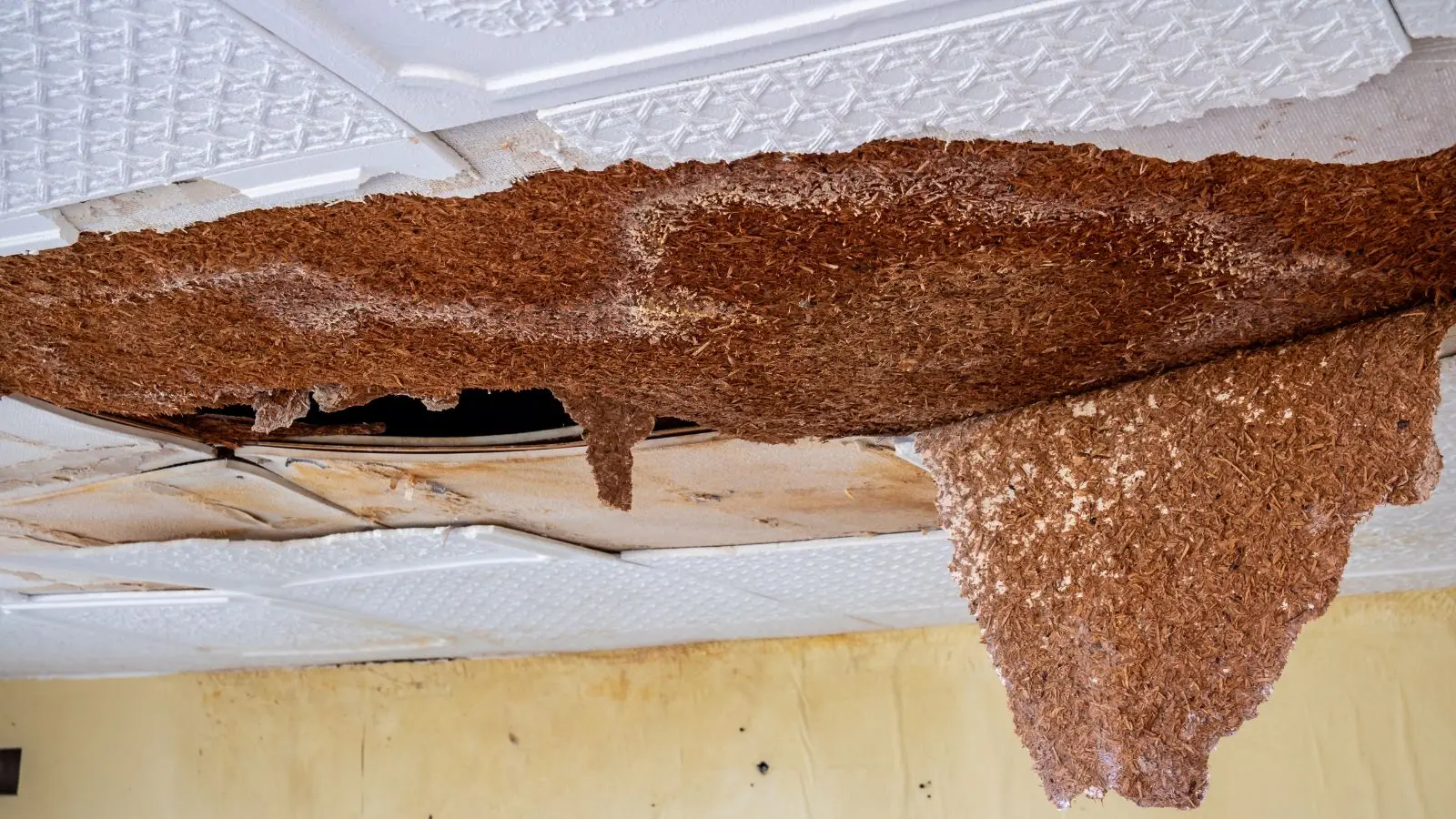
| Stained or sagging ceiling tiles | Water above the grid from a line or roof | Keep people clear and call |
| Wet floor near restrooms | A fixture or supply line is leaking | Shut the local valve or the main |
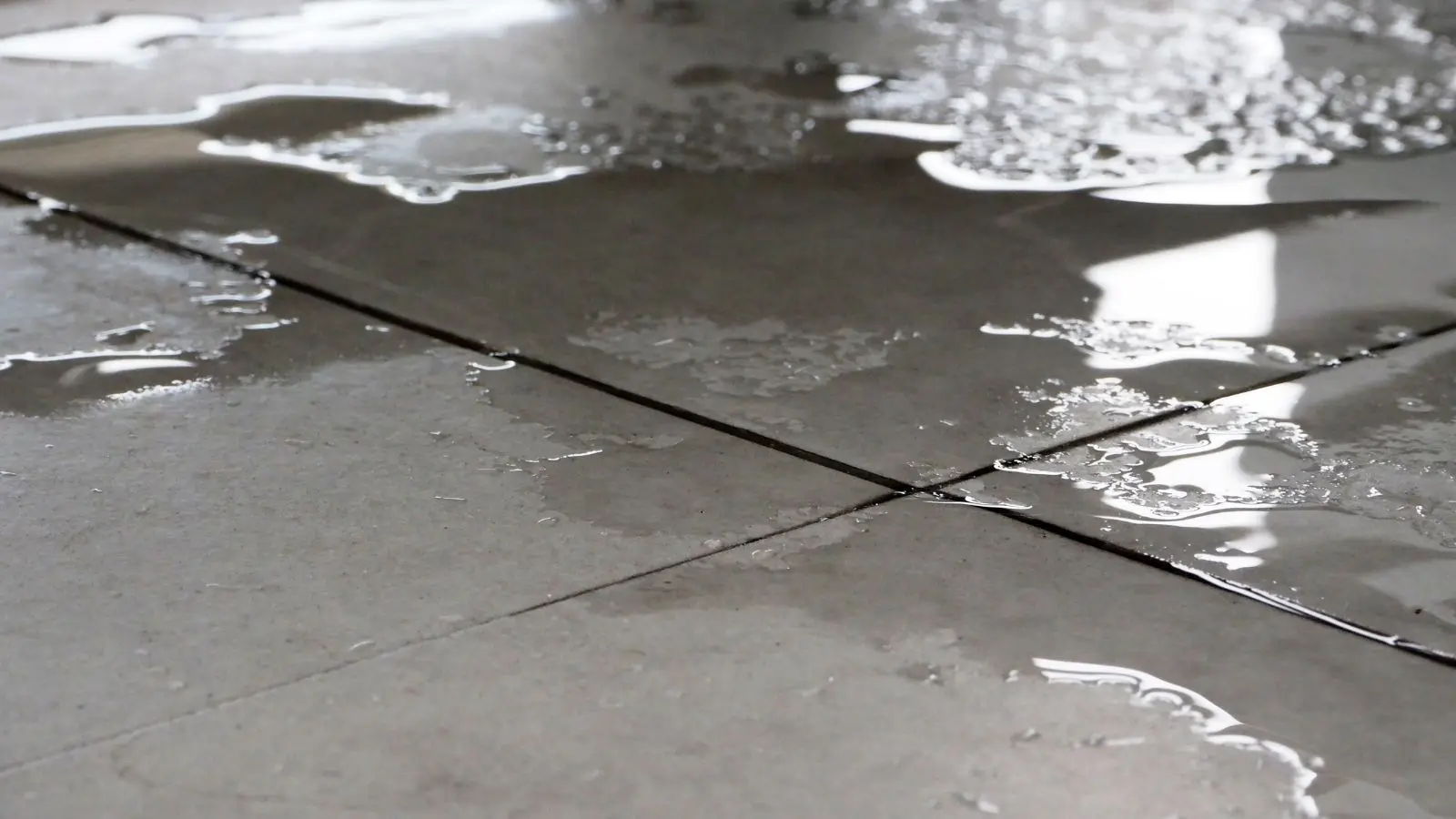
| Standing water on tile | A larger line break or drain backup | Stop the source and call |
| Musty smell in a closed suite | Moisture in carpet, wall base or ceiling | Request moisture readings |
| Wet wall after a storm | Roof or exterior intrusion | Photograph and call |
Safety steps in the first hour
Keep people out of wet areas. Wet floors are slippery, and a sagging ceiling can drop heavy material. Put up signs or tape off the area if it is open to the public or to other tenants.
Shut off the water at the nearest valve, or the main if the source is unclear. If water is near electrical panels, outlets or equipment, do not touch them. Call the electric utility or 911 for an electrical risk before anything else, and have a licensed electrician clear the circuits.
Move records, electronics and stock off the floor if it is safe to do so. Photograph the area, the source and the damage, and note who first saw the water and when. Tell the property manager or owner right away.
- Keep people out and mark the area
- Shut the nearest valve or the main
- Stay away from wet electrical equipment
- Photograph and record the time
What the crew does on site
A crew assesses with moisture meters and a thermal imaging camera, then extracts standing water with pumps and extraction units. Wet carpet, pad and ceiling tiles that cannot dry are removed, and drywall is opened where moisture is trapped. Air movers and LGR dehumidifiers then dry the space, sized to the floor area and ceiling height.
Readings are logged at each visit so the owner and insurer can see progress. We work from the published ANSI/IICRC S500 reference, and owners and insurers can ask any contractor for the basis of its drying plan. Drying is covered in detail on our structural drying page.
We do not rebuild tenant improvements, replace roofs or handle a claim. When drying is done, a general contractor or water damage repair scope handles the rebuild.
What changes the cost
Square footage and ceiling height set the equipment count. Water category matters too, since a clean supply line is different from a drain backup. The number of drying days, the type of flooring and whether ceiling tiles and insulation have to come out all change the scope.
Drying is scoped apart from any repair, with the price agreed before work starts, so owner and insurer see each part.
Insurance and commercial losses
The California Department of Insurance notes that homeowners and commercial policies typically exclude flood, mudslide and debris flow, and that flood coverage is a separate policy. Sudden pipe failures are often handled differently from gradual leaks or storm surface water. Tenants and owners may be covered under different policies.
Check the policy or ask the insurer, and review the lease for who is responsible for what. If water is active, call (760) 769-1159.
Preparing before the next loss
The valley's desert storms are rare and sudden. Tropical Storm Hilary in August 2023 brought National Weather Service two-day totals above 3 inches in Palm Desert and Palm Springs, compared with under 4 inches in a normal year. Roof drains, parking-lot drainage and floor-level entrances can be tested the first time during such an event.
Know where the main water valve and the electrical panels are, and keep a short list of contacts. Repairs that alter structure, plumbing or electrical systems are worth raising with the City of La Quinta Building Division first.
Where we work
We cover La Quinta and take calls from Indio and Rancho Mirage. If a loss involves rising storm water, see flood damage restoration. For a space with active water, call (760) 769-1159 right away.
Questions we hear from La Quinta homeowners
Is emergency commercial water damage restoration available in La Quinta?
Yes. Holidays and weekends included. Say what kind of space it is, what the water has reached and whether it is stopped, and a crew follows with same-day response when available.
Do you handle the insurance claim?
No. We document the damage and provide readings and photos for your records. The claim is between the policyholder and the insurer.
Can you rebuild the space afterward?
We handle drying, cleanup and removal. Rebuilding tenant improvements is a separate scope, usually done by a general contractor.
Who authorizes the work?
Usually the owner or property manager, and sometimes the tenant, depending on the lease. Have that person on the call if you can.
Will the space need to close while you work?
Often the wet area does, and the scope tells you how large that area is. A crew can explain what has to close and what can stay open.
Water still spreading? The line is open 24/7.
Call (760) 769-1159