
What structural drying means
Structural drying is the controlled removal of water from the parts of a building that hold it. That includes framing, drywall, subfloor, slab edges, cabinets and trim. It is different from extraction, which pulls out standing water, and different from cleanup, which removes ruined material.
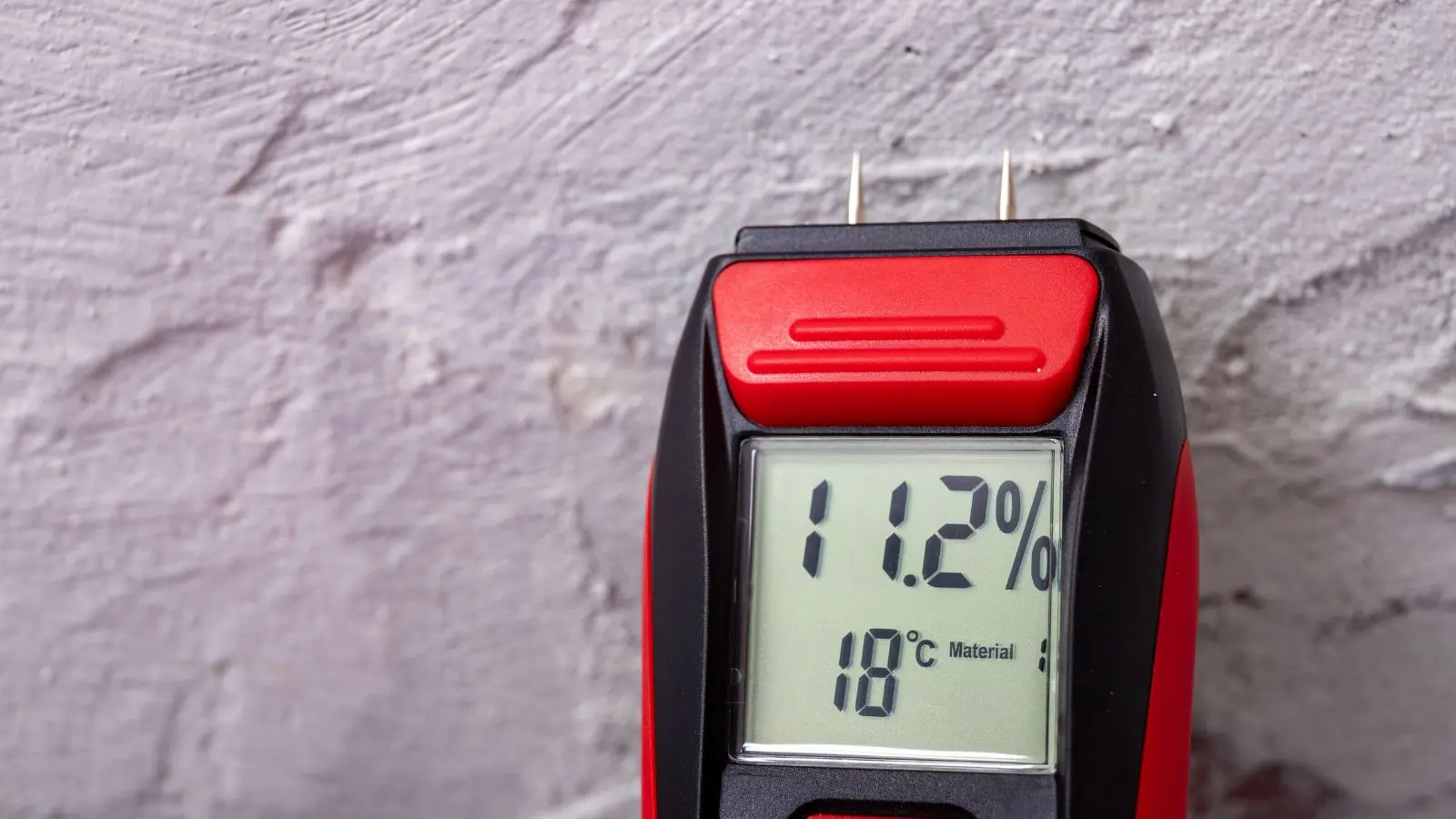
Drying is where many do-it-yourself jobs fail. A floor can feel dry on the surface while the subfloor under it still reads wet, and a wall can look fine while the cavity holds moisture. Equipment and meters are how you tell the difference.
This page covers the drying stage of a loss. If water is still on the floor, start with emergency water removal. For the broader first 72 hours, see water mitigation.
Why the desert does not dry a house for you
The valley is dry. NOAA climate normals show under 4 inches of rain in a typical year, and summer afternoons regularly pass 100 degrees. It is easy to assume a wet house will dry quickly on its own, and sometimes the outside air helps.
Inside a house the picture is different. Wall cavities, insulation and the underside of flooring are sealed from the dry air, and a running AC pulls moisture from the air as it cools. Closed-up homes can hold humidity from a leak for days, especially in an empty seasonal house where nobody opens windows or runs the system.
That is why equipment drying is faster and more reliable than waiting. EPA guidance says drying wet materials within 24 to 48 hours usually prevents mold growth, which is a short window for a sealed cavity.
What the equipment does
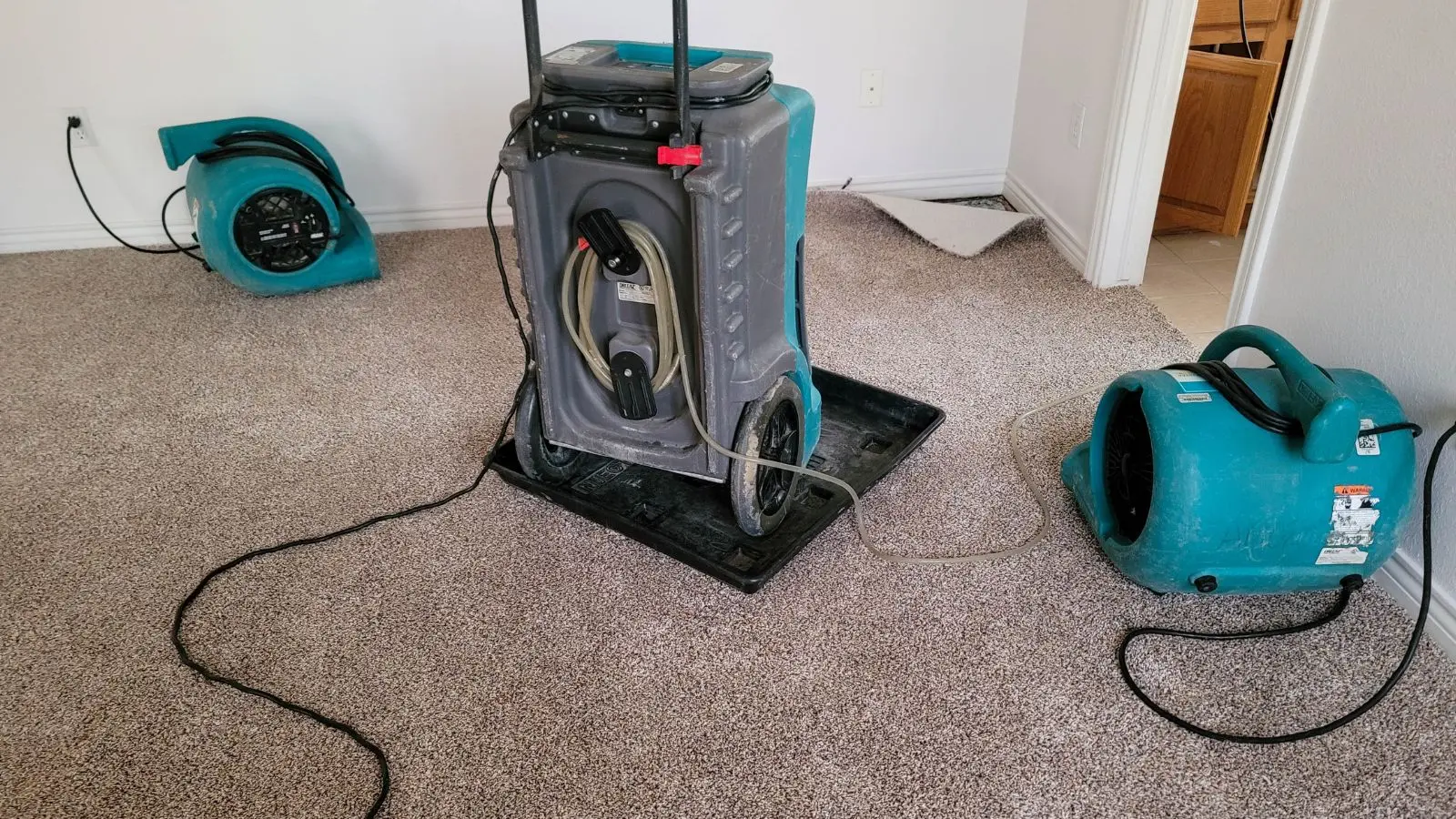
A drying setup works as a system rather than a single machine. Air movers push air across wet surfaces to lift moisture, LGR dehumidifiers pull that moisture out of the air and condense it into a drain, and the room is closed off so the machines work on the same air.
| Tool | What it does | How it is used |
|---|---|---|
| Moisture meter | Reads moisture in drywall, wood and subfloor | Taken at set points and recorded each visit |
| Thermal imaging camera | Shows temperature patterns that hint at wet areas | Used to map where water traveled |
| Air mover | Moves air across wet surfaces | Placed along walls and across floors |
| LGR dehumidifier | Removes water from the air | Sized to the drying space |
| Containment | Closes off the drying area | Keeps dry areas from taking on humidity |
| HEPA air scrubber | Filters airborne particles | Used when demolition raises dust |
Safety steps before drying equipment goes in
Stop the water source first. Drying a wet house with a leak still running is a waste, and the equipment cannot keep up. If you are unsure, close the main water valve.
Check electricity next. Drying equipment draws power, so a crew confirms outlets and cords are dry and that circuits can carry the load. If a panel or outlet is wet, a licensed electrician or the utility has to clear it first. Do not run extension cords through standing water.
Keep children and pets out of the drying space. Equipment is heavy, cords are in the walkway and the air is warm and dry. Move valuables and fragile items out before the crew sets up.
- Source stopped before drying starts
- Outlets and cords checked for water
- Children and pets kept clear of equipment
- Valuables moved out of the drying space
How a drying job runs
The crew starts with meters and a thermal camera to map the wet area and record a baseline. Materials that cannot dry, such as saturated pad and wet insulation, are removed. Then air movers and dehumidifiers are placed to match the room volume and the wet surface area.
Each visit, the crew records readings and adjusts the equipment. Drywall, wood framing and subfloor each have their own target, and the goal is the dry standard for the material, compared with a dry reference reading in an unaffected area. When every reading reaches its target, the equipment comes out.
ANSI/IICRC S500 is the published standard for drying and monitoring, and you can ask any company whether its crews work to it. After drying, water damage repair replaces what was removed.
What changes the cost and the number of drying days
Drying cost follows equipment count and days. More wet square footage needs more air movers, and thicker materials need more time. Hardwood, plaster and concrete are slower than drywall and thin carpet.
Water category, the temperature and the humidity in the house also matter. Scope and price are settled before the equipment goes in, and the readings show you where the job stands.
Insurance and drying documentation
Insurers usually want evidence that the structure was dried and not just cleaned. Daily moisture logs, the equipment list and photos support that. Whether the loss is covered depends on the cause, since sudden events and slow leaks are often treated differently and flood is usually separate.
Check your policy or ask your insurer. If you are not sure whether your home is dry, call (760) 769-1159 and ask for readings.
Mistakes to avoid
Turning off the equipment because the noise is annoying is a common one. Stopping early can leave moisture in framing. Another is moving the air movers around yourself, since placement is part of the plan. A third is closing up walls before the readings are final.
If walls will be opened to dry a cavity, the City of La Quinta Building Division is the place to ask whether repairs need a permit. A crew can note which materials were removed so the rebuild is scoped correctly.
Where we work
Drying crews work across La Quinta and reach Palm Desert and Indian Wells as well, and the line is open 24/7 for new losses. To ask what your readings should be, call (760) 769-1159.
Questions we hear from La Quinta homeowners
How long does structural drying take?
It depends on materials, water volume and conditions. Many jobs run for several days, and thick or dense materials take longer. The crew uses readings, not a calendar, to decide when drying is finished.
Is emergency structural drying available in La Quinta?
Yes. Active water and still-wet walls and floors both qualify, at any hour. Say what got wet and when, and a crew follows with same-day response when available.
Why do the machines get warm and loud?
Dehumidifiers generate heat as they run, and air movers are designed for airflow, not quiet. The noise and warmth are signs the system is working.
Can I use my own fans and a dehumidifier?
They can help with a small spill, but without a moisture meter you cannot tell whether the structure is dry. For anything that soaked into walls or subfloor, a crew with meters is the safer route.
Will dry readings prevent mold?
Mold needs moisture. Reaching the drying goal removes the moisture it would need, but health questions and mold testing are separate. If you see growth, ask about mold remediation.
Water still spreading? The line is open 24/7.
Call (760) 769-1159