
Why roofs leak in a place that rarely rains
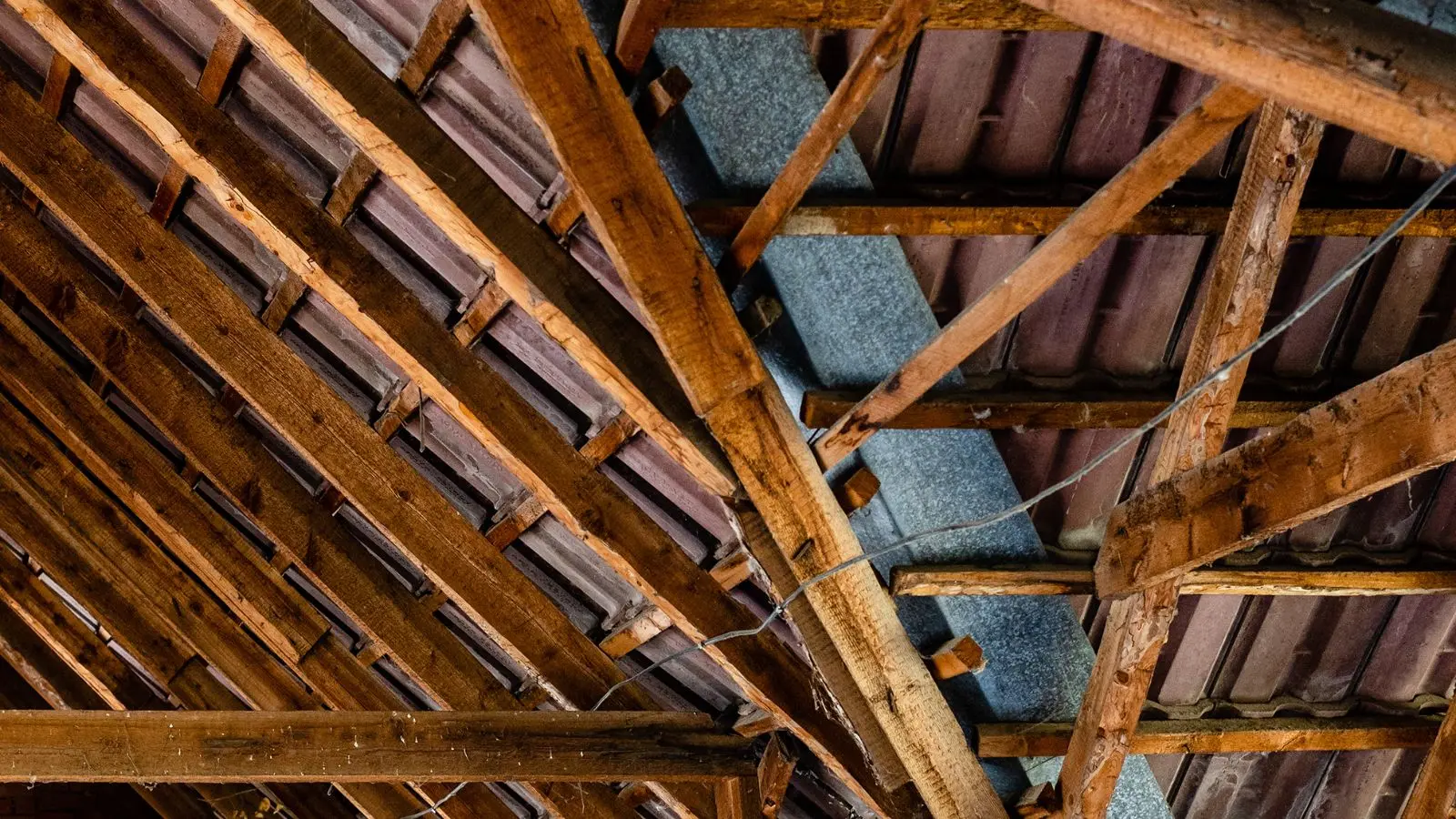
Roof leak water damage in La Quinta is a low-frequency, high-impact event. NOAA climate normals put annual rainfall under 4 inches in a typical year, so a roof can go months without being tested and then face a downpour. Seals, flashing and underlayment that baked through summer heat are the parts that give way first.
Tropical Storm Hilary in August 2023 showed the scale. National Weather Service two-day totals included 3.82 inches in Palm Desert and 2.35 inches at Thermal Airport, which is close to a normal year of rain falling in a day or two. A roof that has been dry for years meets that in one storm, and leaks tend to appear in the first hours.
Roofs here also fail without rain. Plumbing vents, AC lines and rooftop equipment penetrate the roof, and the sealant around them cracks in the sun. If your home has a flat or low-slope section, standing water after a storm is a common way for a small defect to become a stain on a ceiling.
What you see and what it means
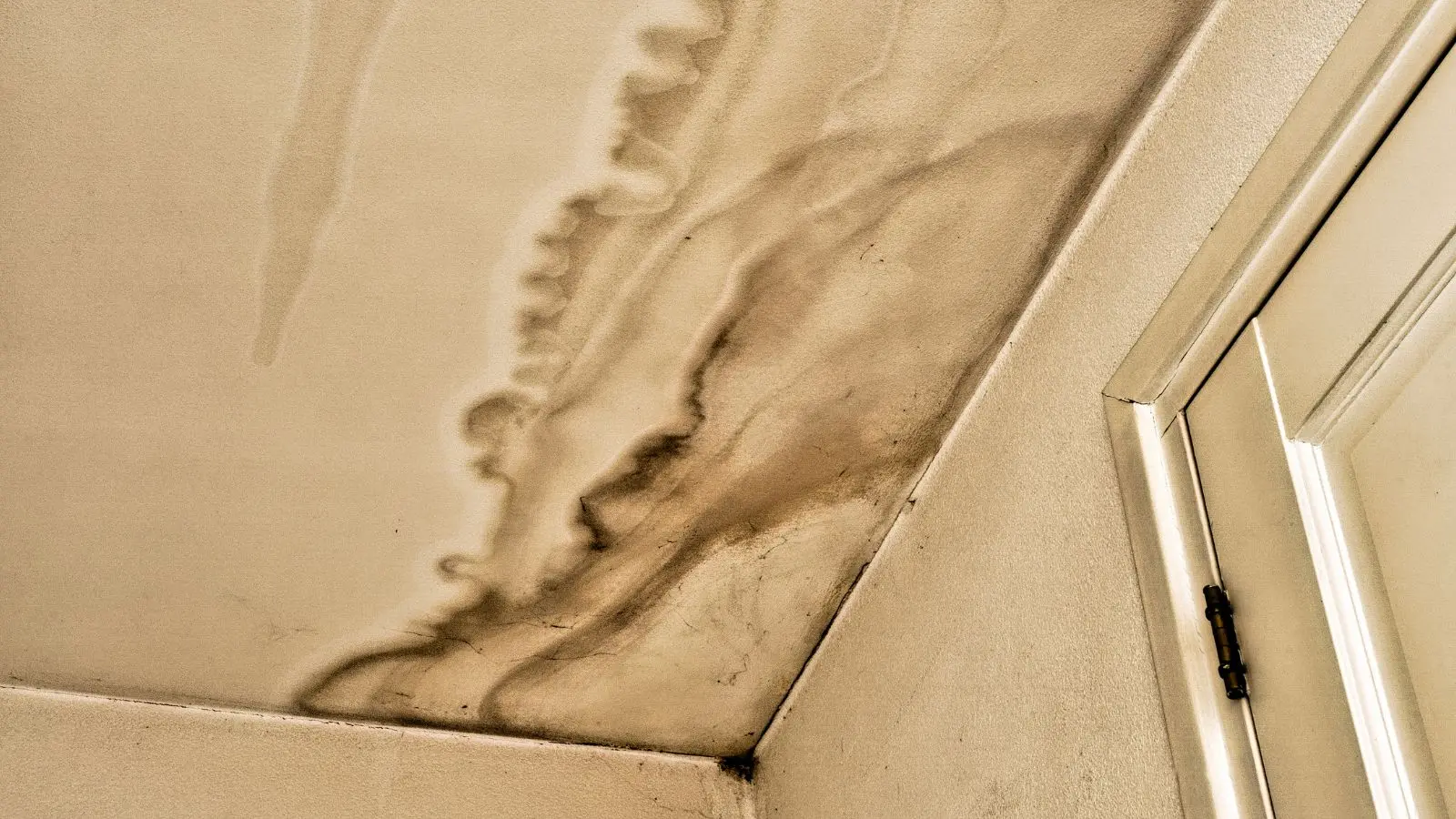
A ceiling stain tells you roughly where water entered, but not always where it came from. Water often runs along a rafter or a duct before it drips, so the visible spot can be several feet from the roof defect.
| Sign inside | Likely meaning | What to do |
|---|---|---|
| Brown ring on the ceiling | Water has soaked the drywall and dried at the edges more than once | Photograph it and mark the edge with a pencil |
| Drip during or after a storm | Active entry above, with insulation likely wet | Catch the water and move belongings |
| Bulging or sagging ceiling | Drywall holding a pocket of water | Do not poke it near light fixtures |
| Peeling paint along a wall top | Water running down inside the wall | Call so the cavity can be checked |
| Musty smell in a closet or hall | Moisture trapped in insulation or framing | Do not ignore it, ask for moisture readings |
Safety steps while water is coming in
Keep people out from under a bulging ceiling. A drywall pocket can release a lot of water at once, and it is heavy. If you can safely do it, place a bucket beneath the leak and poke a small hole at the lowest point of a bulge so it drains into the bucket, but only if no light fixture, fan or wiring is in that area.
Do not climb onto the roof during or after a storm. Wet tile and wet membrane are slick, and roof work belongs to a roofer. Switch off any fixture that is wet or dripping, and if the panel is dry and reachable you can turn off the circuit for that room. If you see sparks or smell burning, leave and call 911 first.
Move furniture, electronics and rugs out of the area, and photograph the stain, the ceiling and the damaged items before cleaning anything up.
- Contain the drip and move belongings
- Keep clear of any bulge or light fixture
- Stay off the roof
- Photograph everything for your insurer
How the ceiling, insulation and attic get dried
The crew starts with moisture meters and a thermal imaging camera, which show how far the water traveled above and beside the stain. Wet blown insulation and batts hold water long after the rain stops, and they usually have to be removed. Saturated drywall comes down in sections so the framing behind it can dry.
Air movers and LGR dehumidifiers then run until readings reach the drying goal. If a roof-level repair is still needed, the roofer closes the source so the room stays dry afterward. Restoration does not repair the roof itself, and a temporary cover over the opening is usually the fastest protection.
ANSI/IICRC S500 is the reference our drying plans are built on, and a roofer or insurer may ask for the readings it calls for. Once the area is dry, water damage repair replaces the drywall and paint.
What changes the cost of a roof leak cleanup
The size of the wet area matters most, followed by how much insulation was soaked and how many ceiling and wall surfaces need to open. Height and access change the labor, and so does whether the water reached flooring or furniture. A leak caught the first night is usually smaller than one that sat through a week of heat.
Before work starts you get the scope and the price, with drying and rebuild listed as separate parts.
Insurance and storm-driven roof leaks
Storm damage to a roof is often treated differently from long-term wear, and the line between them matters. Rain that enters through a storm-opened gap is a sudden event, while a slow leak from an old seal can be treated as maintenance. Policies also treat rising surface water as flood, and the California Department of Insurance notes that standard homeowners coverage does not include flood.
Check your policy or ask your insurer before you assume anything. If water is coming in right now, call (760) 769-1159 and we will walk through what to protect first.
Mistakes to avoid and prevention
Patching a stain with paint is the most common mistake, because the water source is still there and the stain returns. Another is leaving wet insulation in the attic, where it can hold moisture for weeks. A third is climbing up to fix the roof yourself after a storm.
Before the next forecast storm, have a roofer look at flashing and penetrations, clear any roof drain on a low-slope section, and know where the main water shutoff and electrical panel are. Structural roof repair is a question for the City of La Quinta Building Division, which recommends confirming permit needs first.
Where we work
We answer roof leak calls in La Quinta around the clock and cover nearby Coachella and Rancho Mirage. For storm runoff that reaches the floor, see our flood damage restoration page. Water in the ceiling? Call (760) 769-1159 day or night.
Questions we hear from La Quinta homeowners
Is emergency roof leak water damage cleanup available in La Quinta?
Yes, and storm days are when the phones are busiest. Dispatch asks where the water is entering and what it has reached, and a crew follows with same-day response when available. Storms raise call volume across the valley, so no arrival time is promised.
Can you repair the roof itself?
No. A roofer handles the roof. We handle the water damage inside, which includes wet insulation, drywall, framing and flooring. Fixing the roof source is necessary so the dried area stays dry.
Should I cover the hole in the ceiling?
Do not seal a wet ceiling. Moisture needs to escape and drywall that stays wet can grow mold. Catch the water, keep the area ventilated and let a crew assess it.
How long can wet attic insulation stay in place?
Soaked insulation rarely dries out inside the two-day window that EPA moisture guidance uses as the line for mold prevention. That is why it is usually removed.
Does a desert roof leak always mean a storm?
No. Cracked sealant around vents, AC lines and flashing can let in small amounts of water from roof sprinklers, cleaning or dew. The stain may appear long after the cause.
Water still spreading? The line is open 24/7.
Call (760) 769-1159